
November in Chicago means one thing for rooftop owners: it's time to prep. I've seen what happens when people skip this step. Cracked planters, warped decking, frozen pipes, drainage problems that turn into interior water damage. None of it is fun to deal with in February.
An hour of prep now saves thousands later. Here's what needs to happen.
Drainage: The First Priority
Water that can't drain will freeze. Frozen water expands. Expanding ice damages everything it touches—decking, planters, membrane, furniture. This is basic physics, and Chicago gives you plenty of opportunities to learn it the hard way.
Before the first freeze:
- Clear all drains of leaves, debris, and anything blocking water flow
- Check that water actually reaches the drains—watch during a rain or run a hose
- Make sure overflow drains are clear (these are your backup if primary drains clog)
- Inspect the roof membrane around drains for any damage or lifting
If water pools anywhere on your deck, that's a problem waiting to happen. Address it before temperatures drop.
Furniture and Accessories
Not all outdoor furniture survives Chicago winters. Even furniture rated for outdoor use can deteriorate faster when exposed to freeze-thaw cycles, snow load, and ice.
The smart approach:
- Move what you can: Cushions, umbrellas, and lightweight pieces should come inside or go into storage
- Cover what stays: Quality covers protect frames from moisture and ice
- Elevate where possible: Furniture sitting directly on the deck surface traps moisture underneath
- Secure everything: Winter winds on a rooftop are no joke. Anything that can blow away will blow away
Cast aluminum and quality teak can handle the elements. Wicker, fabric, and untreated wood can't.
Plants and Containers
Container plants on a rooftop face harsher conditions than plants at ground level. Less insulation, more wind exposure, faster temperature swings. Some plants survive; many don't.
Your options:
- Bring tender plants inside: Tropicals, most annuals, and frost-sensitive perennials won't make it
- Protect hardy perennials: Wrap containers with burlap or insulation. The roots need more protection than the tops
- Water before hard freeze: Hydrated plants handle cold better than dry ones
- Empty terracotta: Porous containers crack when water inside them freezes. Either empty them or bring them in
Built-in planters with proper drainage and insulation handle winter better than freestanding containers. That's something to consider in your design.
Water Systems
Any water system on your rooftop needs winterization. This includes:
- Irrigation systems: Blow out all lines with compressed air. A single freeze can crack pipes and fittings
- Outdoor kitchens: Shut off water supply, drain all lines, disconnect hoses
- Water features: Drain pumps and basins, or run a de-icer if the feature is designed for winter operation
- Hose bibs: If you have an exterior faucet on the roof, make sure it's frost-proof or properly shut off inside
Water damage from burst pipes is one of the most expensive repairs we see. It's also one of the most preventable.
Structural Check
Before winter is a good time to inspect the structure itself:
- Check railings for loose connections or corrosion
- Look for any decking boards that have lifted, warped, or come loose
- Inspect steel components for rust spots that need treatment
- Make sure all fasteners are tight—temperature cycling loosens things over time
Small problems now become bigger problems after a winter of freeze-thaw cycles. Fix them while the weather still allows.
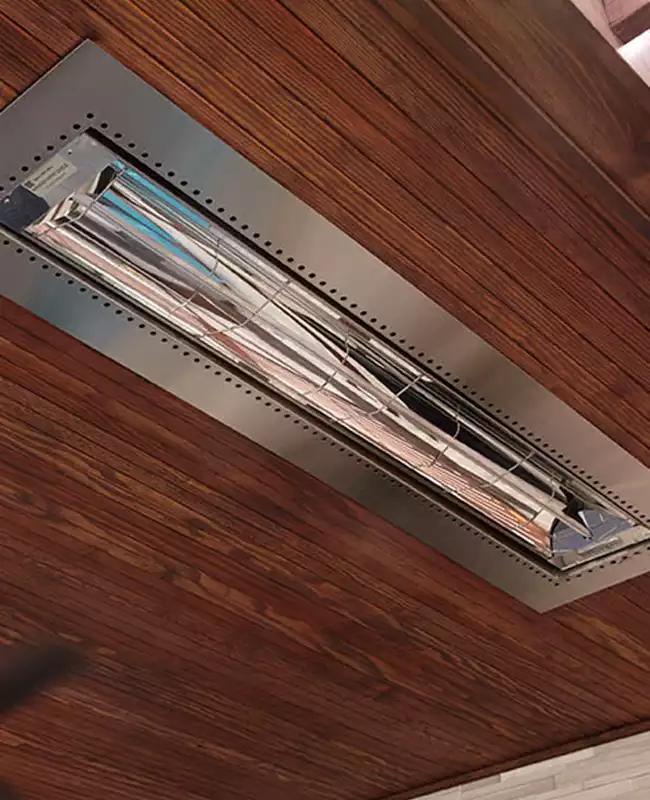
Heating Systems
If you have outdoor heaters, fall is the time to service them:
- Gas heaters: Check connections, clean burners, verify ignition
- Electric heaters: Inspect elements and electrical connections
- Fire features: Clean burners, check gas lines, test ignition systems
A heater that doesn't work when you need it defeats the purpose of having one. Get them checked before the first cold snap.
Snow Considerations
Chicago roof decks need to handle snow load. If your deck was properly engineered, this is already accounted for. But there are still practical considerations:
- Don't let snow accumulate excessively: While the structure should handle normal snow, removing excess after major storms is prudent
- Use plastic shovels: Metal shovels damage decking surfaces
- Avoid salt on wood: Use sand or pet-safe de-icers instead of rock salt, which damages wood and some composites
- Clear paths to drains: Snow melt needs somewhere to go
The Checklist
Here's the summary for your files:
- Clear all drains and verify drainage paths
- Move or cover furniture
- Protect or store plants
- Winterize all water systems
- Inspect structural components
- Service heating equipment
- Secure anything that could blow away
The decks we build are designed to withstand Chicago conditions. But even the best-built structure benefits from proper seasonal care. Take the time now, and your rooftop will be ready when spring returns.
Questions about winterizing your specific setup? That's what we're here for. We know these rooftops—we built most of them.